
 Baby
 Kids
 Learn
 FIND A STORE
 CONTACT

Crib Mattress Size Guide: Why a Snug Fit Keeps Baby Safe
If you've ever held a mattress up to a crib and thought, "Wait, is this actually supposed to fit like this?”, you’re asking the right questions. Crib mattress size is one of the more overlooked pieces of safe sleep, but that doesn’t mean it’s not important.
A standard, full-size crib mattress (sometimes called an infant bed mattress size) needs to measure at least 27.25 inches wide by 51.625 inches long, per current CPSC requirements. The crib itself often has slightly larger interior dimensions — about 28 inches by 52.375 inches, with some permitted tolerance — which is why the mattress and crib aren't an exact one-to-one match.
That small difference matters. Gaps between the mattress and the crib frame can create entrapment and suffocation hazards, which is why the American Academy of Pediatrics recommends skipping any crib-and-mattress combination where more than two fingers fit into the gap.
Below, we'll walk through standard crib mattress dimensions, how mini crib mattresses differ, the two-finger test, and how to confirm a proper fit before your little one sleeps on it.
Note: This blog may contain links to Lullaby Earth products and promotional content where relevant to the topic discussed.
What Size Is a Standard Crib Mattress?
A standard, or full-size, crib mattress must measure at least 27.25 inches wide by 51.625 inches long. Full-size cribs are built around standardized interior dimensions, which is why most mattresses made for full-size cribs land in a pretty similar size range.
It's worth noting that "standard crib size" and "standard crib mattress size" aren't the same measurement. Mixing them up is an easy (and common) point of confusion.
The crib's interior — about 28 inches by 52.375 inches — describes the space inside the crib frame, not the mattress itself. The mattress runs slightly smaller so it can fit inside that space while still meeting strict fit requirements. In other words, a little wiggle room is by design, not a flaw, as long as it stays within safe limits (more on that below).
Why Does a Crib Mattress Need to Fit So Snugly?
A snug crib mattress size limits the space where your baby's head, face, arms, legs, or body could get trapped between the mattress and the crib frame. It sounds like a small detail, but entrapment is one of the leading hazards linked to crib deaths, which is exactly why mattress fit gets its own set of federal standards separate from the crib itself. The CPSC recommends a firm, tight-fitting mattress for infant sleep, and that guidance holds even if you've splurged on the nicest mattress on the market.
What Is the Two-Finger Rule for Crib Mattresses?
You don't need a tape measure to sanity-check a mattress fit. The two-finger rule is the quickest way to tell whether a mattress is too small for its crib, and it's the same test pediatricians and safety experts point to again and again. Here's the quick version:
- Push the mattress firmly toward one side of the crib.
- Check the resulting gap between the mattress and the crib side or end.
- If more than two fingers fit into that gap, that mattress-and-crib combination shouldn't be used.
One good habit: check around the entire perimeter of the mattress, not just one corner. A snug fit on one side doesn't guarantee a snug fit everywhere else.
Can a Crib Mattress Be Too Small?
Even a mattress that sits flat inside the crib, with no obvious warping or shifting, can leave dangerous gaps around the edges if it's simply undersized for that particular crib. A too-small mattress won't announce itself the way a broken slat or a wobbly frame might — it can look perfectly fine at a glance while still leaving room for a gap that's unsafe.
It might be tempting to fill in that space with towels, blankets, bumpers, or foam, but please don't. Those "fixes" don't solve the entrapment risk (they can actually add to it, giving your baby more loose material to become tangled in or pressed against). The real solution isn't a workaround, it's simply swapping in a properly compatible mattress.
How to Measure Your Crib for a Mattress
Between assembling the crib, decoding the instruction manual, and figuring out where all the extra screws go, actually measuring for a mattress can feel like the last thing on your to-do list. Getting the measurements of a crib mattress right only takes a few minutes, though, and it's worth doing before baby's first night in the crib.
- Check the crib manual first. The manufacturer's specified mattress dimensions and compatibility notes are your starting point.
- Measure the inside of the crib. Get the interior length and width where the mattress will actually sit.
- Compare those measurements to the mattress's listed specifications.
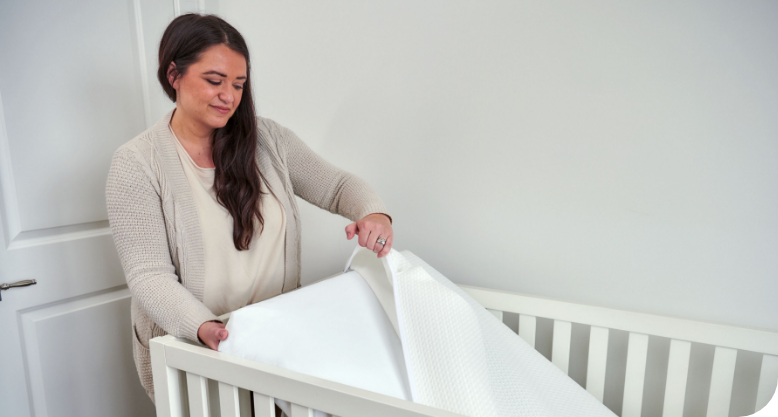
- Place the mattress inside the fully assembled crib.
- Perform the two-finger fit test around the whole perimeter.
Product page measurements are a helpful starting point, but the true test is how the mattress fits inside your assembled crib. And if a mattress ever starts to look compressed, warped, or damaged, measure and test the fit again.
Are All Crib Mattresses the Same Size?
Full-size crib mattresses follow strict, standardized sizing requirements, which is why they tend to look nearly identical from brand to brand. But step outside that category, and things get a lot less consistent. Mattresses made for mini cribs, portable cribs, and other non-full-size sleep spaces can vary quite a bit in both width and length, with no single universal measurement to fall back on.
Standard vs. Mini Crib Mattress Sizes
"Mini crib mattress" doesn't refer to one universal size the way "full-size crib mattress" does. Non-full-size cribs vary in their dimensions from model to model, so it's best to shop according to your specific crib rather than assuming every mini crib mattress is interchangeable. CPSC requirements do address compatibility for aftermarket mattresses used with non-full-size cribs, so double-check those guidelines before you buy.
What About Bassinets and Play Yards?
Bassinets and play yards are their own category, separate from cribs, and their sleep surfaces aren't interchangeable with crib mattresses, even if the measurements look close on paper. Swapping in a mattress that wasn't designed and approved for that specific product means skipping the safety testing that mattress was actually built around.
Always use the sleep surface that's specifically designed and approved for the bassinet or play yard you own, and resist the urge to mix and match just because two products happen to be sitting in the same nursery.
How Thick Should a Crib Mattress Be?
Under CPSC crib requirements, a mattress for a full-size crib shouldn't exceed 6 inches thick. And thicker doesn't mean safer, or more supportive, for that matter — fit, firmness, and compatibility matter more than maximizing height. A firm, flat sleep surface is what your little one actually needs, not a plush, pillowy one.
Does a Crib Mattress Fit a Toddler Bed?
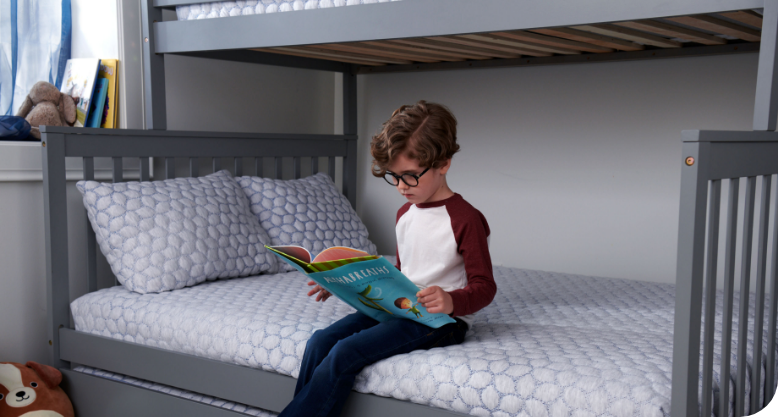
Usually, yes. Toddler beds are generally designed around full-size crib mattress dimensions, so many families are able to keep using the same mattress well after the crib stage. The CPSC defines toddler beds around those same full-size crib mattress dimensions — one of the small conveniences of this transition. That said, it's still worth confirming your specific toddler bed's mattress requirements before making the switch.
What Else Should You Look for in a Crib Mattress?
A mattress can be the correct dimensions and still fall short in other ways that matter for your baby's day-to-day comfort and safety. Size and fit are the foundation, but a few other factors are worth keeping in mind, too:
- A firm, flat infant sleep surface
- Proper fit for your specific crib
- A waterproof, easy-to-clean surface for inevitable messes
- A lightweight design, which makes middle-of-the-night sheet changes a little easier
- Materials and third-party certifications as an additional consideration
Lullaby Earth full-size crib mattresses are designed to fit standard full-size cribs, so matching mattress dimensions to your sleep space is one less thing to worry about.
Crib Mattress Size FAQs
What is a standard crib mattress size?
A standard crib mattress size is at least 27.25 inches wide by 51.625 inches long, with a maximum thickness of 6 inches, per CPSC regulations. These dimensions apply specifically to mattresses made for full-size cribs, which are by far the most common crib type in U.S. households. If a mattress falls outside these measurements, it isn't considered compliant with federal crib mattress standards.
What size is a full-size crib?
A full-size crib measures about 28 inches wide by 52.375 inches long on the inside, subject to permitted tolerances. That's slightly larger than the minimum mattress size, which is intentional as it allows manufacturers some flexibility in construction while still ensuring a fit that aligns with baby sleep safety guidelines. This small gap between crib and mattress dimensions is normal and expected, as long as it stays within the two-finger rule.
How much space should be between a crib mattress and the crib?
As little as possible. If you can fit more than two fingers between the mattress and the crib, that mattress-and-crib combination shouldn't be used, since the gap creates a real entrapment risk. Checking around the entire perimeter, not just one side, gives you the most accurate read on whether the fit is actually safe.
Can you put a standard crib mattress in a mini crib?
Generally, no — unless the crib manufacturer specifically confirms that combination is compatible. Mini cribs don't follow the same standardized dimensions as full-size cribs, so a standard mattress is likely to be too large or create dangerous gaps. Always check your specific crib's manual or manufacturer specifications before assuming a mattress will fit.
Is a crib mattress the same size as a toddler mattress?
In most U.S. toddler beds, yes. A full-size crib mattress is also the intended mattress size for most toddler beds, which is part of why so many families reuse the same mattress through that transition. Still, it's worth double-checking your specific toddler bed's requirements, since not every model follows this standard.
How thick can a crib mattress be?
No more than 6 inches for a full-size crib, per CPSC guidelines. Firmness and proper fit matter far more than height when it comes to protecting your baby. If a mattress advertises extra thickness as a comfort feature, it's worth confirming it still falls within these safety limits.
Have feedback on our story? Contact us to let us know what you think or visit our about us page to learn more!
The Right Fit, Every Night
A properly sized crib mattress means one less thing to worry about and one more way our products have got you covered.


This article or parts of this article may have been created with the support of AI tools. All Lullaby Earth content is thoroughly reviewed and edited by our team to ensure accuracy.